

Remember when was the last time you walked past a jewelry store window? Rings, necklaces, and bracelets look beautiful – but have you ever wondered what goes into making them? For a long time, designing jewelry was a skill that only trained professionals could master. It took years to learn, expensive software to use, and even more time to create the designs.
That world is changing rapidly. Today, artificial intelligence – also known as AI – is entering the jewelry studio and opening doors for everyone. Whether you’re a brand new beginner or a working designer, AI tools make it possible to create stunning, one-of-a-kind jewelry pieces in a fraction of the time it used to.
This blog explores the future of jewelry design, explains how AI is changing the creative process, and shows you exactly how you can start using it to design beautiful jewelry like a pro.
What Is AI In Jewelry Design?
AI in jewelry design means using smart computer programs that learn from thousands of existing designs, styles, and patterns – and then help you create new ones. These programs can take your ideas and turn them into real, professional-looking jewelry designs without any special training.
You don’t need to know how to sketch or use complex software. Patent Jewellery Design in India. You simply describe what you want – for example, “a rose gold ring with a floral pattern and a small emerald in the middle” – and the AI generates a design based on your words. It’s that simple.
Generative AI, the most widely used type in jewelry design, works by learning patterns from vast amounts of image and design data. It then uses that knowledge to create something new based on what you ask. Tools like Midjourney, DALL-E, and purpose-built jewelry platforms use this technology to help designers bring their visions to life..
Why Traditional Jewelry Design Was So Difficult
Before AI came along, creating professional jewelry designs was a huge challenge – especially for beginners. Here’s what made it so difficult:
- Learning complex CAD (computer-aided design) software took months or even years of study.
- Professional design courses and software licenses cost thousands of dollars, making them out of reach for many.
- Without instant visual feedback, beginners couldn’t easily tell whether their designs would work in real life.
- Understanding gem settings, metal properties, and manufacturing regulations required deep industry knowledge that was hard to come by.
All of these obstacles meant that only trained professionals could create quality jewelry designs. Everyone else was left out. AI completely changes this equation.
Read Also: Trendy Names For Jewelry Business (2026 Updated List)
How AI Is Transforming The Jewelry Design Process
1. Designing With Words, Not Technical Skills
The most exciting thing about AI jewelry tools is that you talk to them like a person. Instead of learning complex software commands, you simply describe your idea in plain language. The AI understands your vision and instantly creates a 3D model or image that matches your description. No vocabulary. No years of training. Just your creativity and a few words.
2. Generative Design: Hundreds of Ideas in Minutes
AI-powered generative design software works by taking a set of rules or preferences – things like size, style, material, and gemstone type – and then generating dozens or even hundreds of unique design options in just minutes. This saves designers a lot of time. Instead of starting each sketch from scratch, designers can explore a wide range of styles, from classic to modern – and choose the direction that feels right. The software also finds creative combinations that a human designer might miss, helping jewelers push the boundaries of what’s possible.
3. Instant 3D Visualization
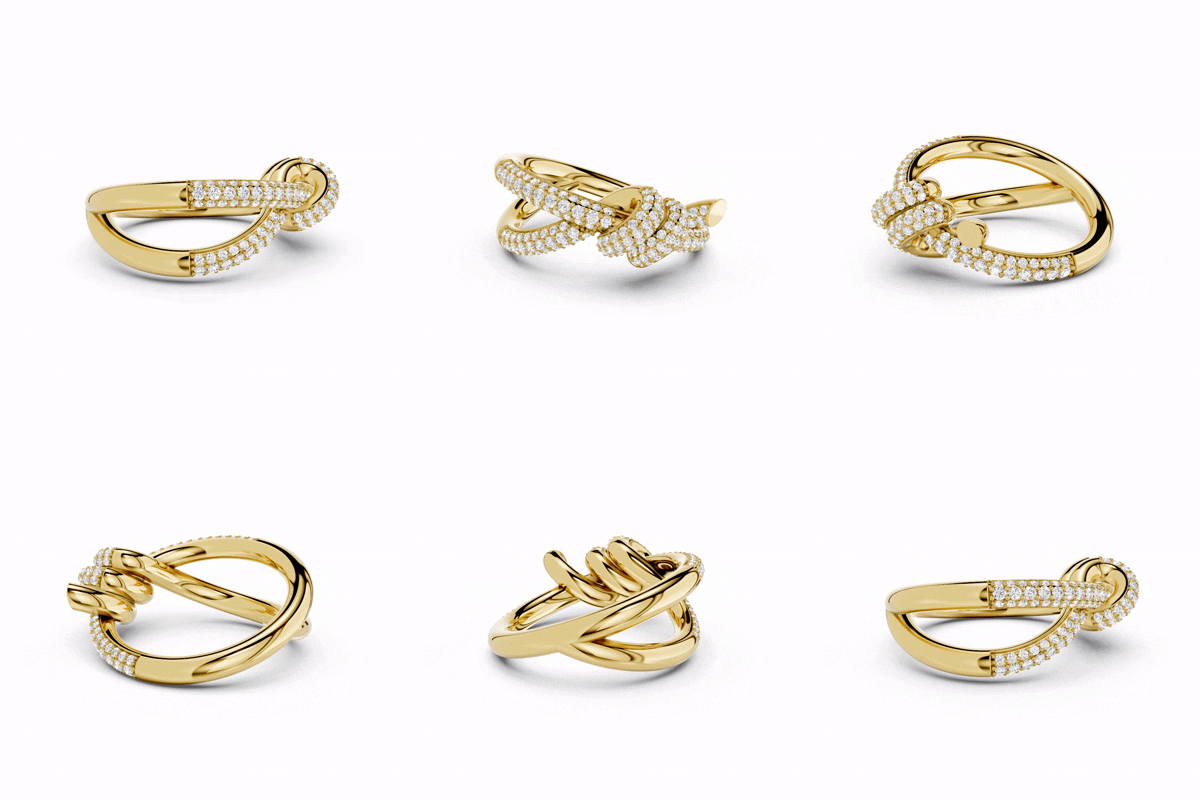
Seeing a design before you create it is incredibly important. AI-powered 3D modeling tools create highly detailed, realistic images of jewelry pieces that allow you to view the design from every angle, zoom in on fine details, and even see how the piece catches the light. This level of detail helps catch problems early and ensures that the final piece matches exactly as the customer envisioned. For buyers, this means a better, more confident shopping experience – and fewer surprises when the jewelry arrives.
4. From Image to CAD in Record Time
One of the most practical breakthroughs in AI jewelry design is the ability to go from a reference photo to a working CAD component in a fraction of the time normally required. CAD used for jewelry design and production traditionally, every curve, petal, or decorative element on a bracelet or ring had to be modeled by hand in design software-a slow and specialized task. Today, AI can look at a reference image, identify a specific design element, such as a floral motif, and directly generate a corresponding 3D component. Designers can then use this component as a starting point and refine it further. Work that once took hours of manual modeling can now begin with an AI-generated foundation, reducing design time from weeks to days.
AI Tools Designers Use Today
The world of AI jewelry design tools has grown quickly. There are now several powerful options available, each with its own strengths:
- Image generation tools like Midjourney and DALL-E let designers type a text prompt and get a realistic image of a jewelry piece in seconds. These tools are great for exploring mood boards, generating style references, and getting inspired.
- 3D CAD AI platforms take things further by turning those concepts into actual manufacturing-ready 3D models, complete with proper proportions and settings.
- AI rendering tools create photorealistic product images that look like studio photos – without needing a physical piece or a photographer.
- Cost estimation AI can instantly calculate stone counts, metal weights, and setting requirements just by analyzing a design, saving a huge amount of back-and-forth with manufacturers.
Brands like Metalonyx Jewellery are already using these tools to speed up their design process and create more personalized pieces for their customers.
AI Goes Beyond Design: How It Helps In Manufacturing Too
AI isn’t just limited to design sketches. It’s also impacting how jewelry is actually made. Smart manufacturing systems now use AI to detect material defects, improve cutting precision, and reduce waste metal and gemstones. This means better quality pieces at lower production costs.
On the business side, AI tools help jewelry brands predict which designs will sell well by analyzing trends, consumer preferences, and purchasing data. This data-driven approach means fewer slow-moving pieces and more of what customers really want – a win-win for everyone.
What The Future Of Jewelry Design Looks Like
he future of jewelry design isn’t just about faster tools – it’s about a complete transformation of how the industry works. Historically, job roles at jewelry companies were pretty clear: sketchers sketched, CAD technicians modeled, and manufacturers created. AI is blurring all these lines.
Today’s designers, working with AI, can do things that previously required an entire team. They can use AI-powered tools to find gaps in collections, generate campaign-quality product photos without a studio shoot, estimate production costs in real time, and visually search inventory to create social media content-all from their design desk.
This doesn’t mean that human craftsmanship is any less important. Master jewelers, engineers, and skilled artisans remain essential. AI does the repetitive and technical groundwork, freeing up human experts to focus on the subtle refinements and artistic decisions that machines can’t replicate. According to research from GIA in the fall of 2024, generative AI is creating stunningly realistic designs from simple cues-but humans are still indispensable to bringing the jewelry’s story and meaning to life.
Metlonyx Jewelry is one example of a brand that understands this balance – using AI tools to accelerate the design process while keeping a human touch at the heart of every finished piece.
How To Start Designing Jewelry With AI: A Simple 5-Step Process
You do not need to be a professional to start designing with AI. Here is a beginner-friendly process to get you going:
- Step 1 – Start with your vision: Think about the style, occasion, and feeling you want the piece to express. Do not worry about technical details yet.
- Step 2 – Describe your design in plain language: Use natural words to tell the AI what you want. Be as specific or as general as you like – the AI can work with both.
- Step 3 – Review and refine: Look at what the AI creates and give feedback. Want the band thicker or the gemstone bigger? Just say so.
- Step 4 – Explore variations: Try different materials, styles, and gem arrangements. AI makes experimentation fast and risk-free.
- Step 5 – Finalize and share: Once you are happy with the design, export the files and take them to a jeweler for manufacturing – or share them online.
Most AI jewelry design tools today are set up to produce manufacturing-ready specifications that any jeweler can work with directly. This means your first AI-designed piece can go straight from your screen to a real jeweler’s workbench.
Continue Reading: How to Make a Custom Pendant: The Step-by-Step CAD Process
Key Benefits Of Using AI For Jewelry Design
- No experience needed – AI removes technical barriers so anyone can design.
- Faster design cycles – What used to take weeks now takes days or hours.
- More personalization – Customers can get truly one-of-a-kind pieces built around their exact preferences.
- Lower costs – Less trial and error means fewer wasted materials and a lower price for the customer.
- Better collaboration – Designers and clients see the same realistic visualization before anything is made, reducing miscommunication.
- Ethical and sustainable potential – AI helps reduce material waste and supports smarter sourcing decisions.
A Few Things to Keep In Mind
AI in jewelry design is powerful, but it’s not without its challenges. Here are some important things to keep in mind:
First, many AI image tools are trained on data from the internet, which can sometimes raise questions about ownership and originality. It’s important to use AI to fuel your own creative ideas rather than simply copying existing styles.
Second, an AI-generated design is a starting point-not a finished product. A skilled jeweler still needs to review the design for structural integrity, proper stone protection, and manufacturing accuracy. AI handles the creative groundwork; human expertise handles the final execution.
Finally, while tools are becoming more user-friendly every day, taking the time to learn the basics of gemstones and metals will make you a better AI designer, not just a button-pusher.
Conclusion
The future of jewelry design is here-and it’s more accessible, exciting, and creative than ever before. AI tools aren’t replacing the art and craft of jewelry making; They are giving everyone – from complete beginners to seasoned designers – better tools to bring their ideas to life.
If you’ve ever dreamed of designing your own ring, making a custom necklace, or starting a jewelry line, AI makes it possible today. The barrier between your imagination and real, beautiful jewelry has never been lower.
Brands like Metalonyx Jewellery are already shaping the look of this new era of design – blending the precision of AI with the warmth of human artistry. The question is no longer whether AI will change jewelry design. It already has. The real question is: Are you ready to design your first piece?
Frequently Asked Questions (FAQs)
No. Most AI jewelry design tools are built specifically for people without a design background. If you can describe what you want in plain words, you can create professional-looking designs.
Yes. Modern AI design tools produce specifications that are compatible with real manufacturing processes. Any skilled jeweler can take these files and create the physical piece from them.
Traditional design software requires you to manually build every element of a design. Generative AI creates designs on its own based on your text or image input, making the process much faster and easier for beginners.
Not at all. Professional designers use AI to speed up their workflow, explore more variations, generate realistic product images, and estimate manufacturing costs – all things that used to take far more time.
AI is transforming jewelry design from a slow, technical, expensive process into a fast, accessible, and highly personalized one. It is changing who can design, how quickly collections come to market, and how closely finished pieces match what customers actually want.
Yes. AI tools trained on internet data can sometimes raise questions about ownership of design styles. It is best practice to use AI to amplify your own creative ideas rather than recreate the specific styles of other designers without permission.
How useful was this post?
Click on a star to rate it!
Average rating 4.5 / 5. Vote count: 25
No votes so far! Be the first to rate this post.
We are sorry that this post was not useful for you!
Let us improve this post!
Tell us how we can improve this post?